Ventilation system cleaning based on VDI 6022
Inspection and cleaning of ventilation and air-conditioning systems. Robot-assisted, documented and in many cases without shutting down your production.
Ventilation system cleaning
Ventilation and air-conditioning systems supply air to production halls, hospitals, office buildings and laboratories. Without regular cleaning, they become a source of contamination themselves.
The principle of VDI 6022 is clear: the air supplied must never be worse than the outdoor air. Dust absorbs moisture, and spores and bacteria settle on it. At the same time, the pressure drop rises and the fan has to work against its own dirt.
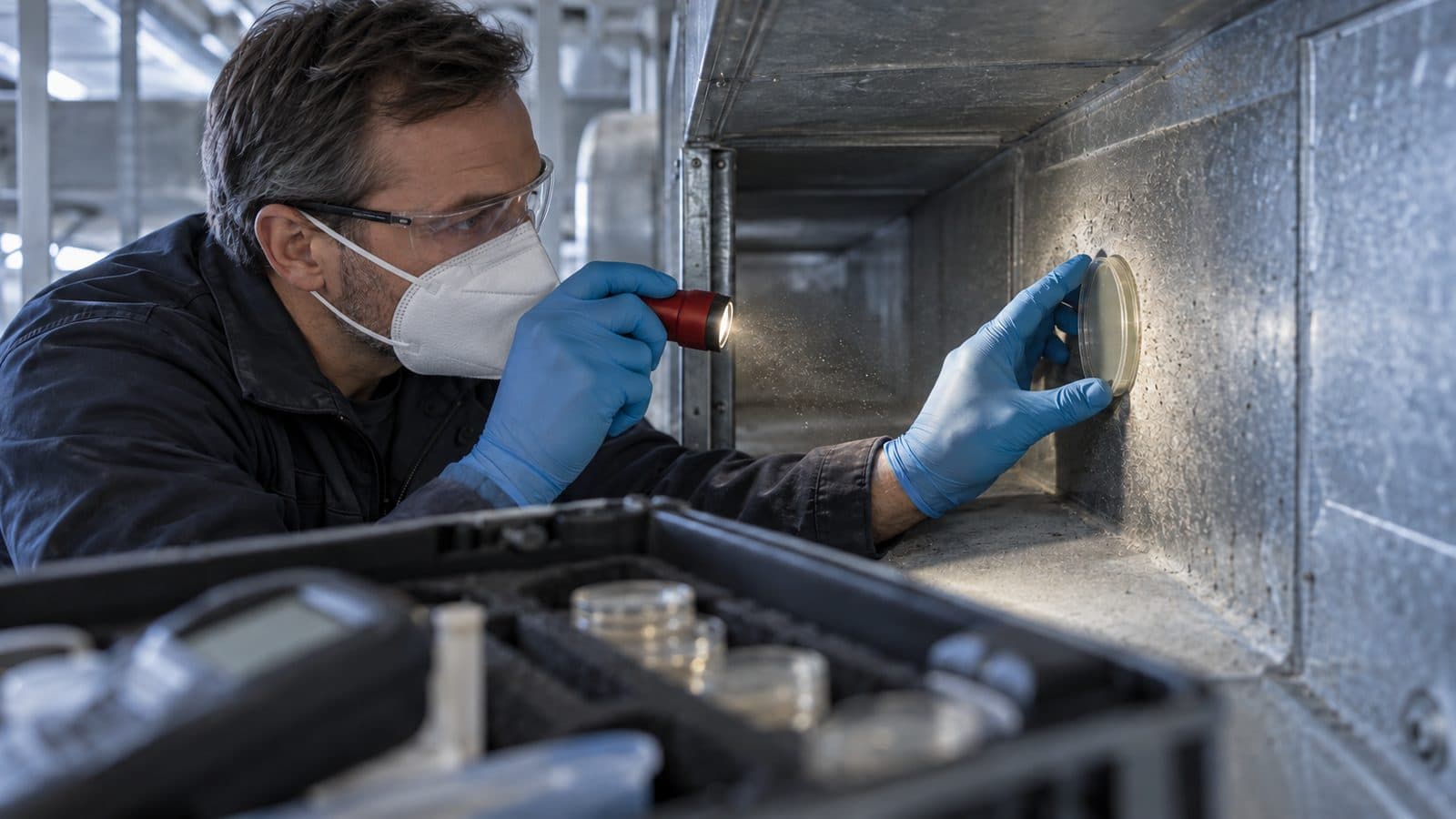
We survey your ductwork with a remote-controlled camera robot, record its current condition and then clean it section by section under negative pressure. In many systems, the rest of the installation keeps running normally while we work.
What we take care of
Air handling units and sections
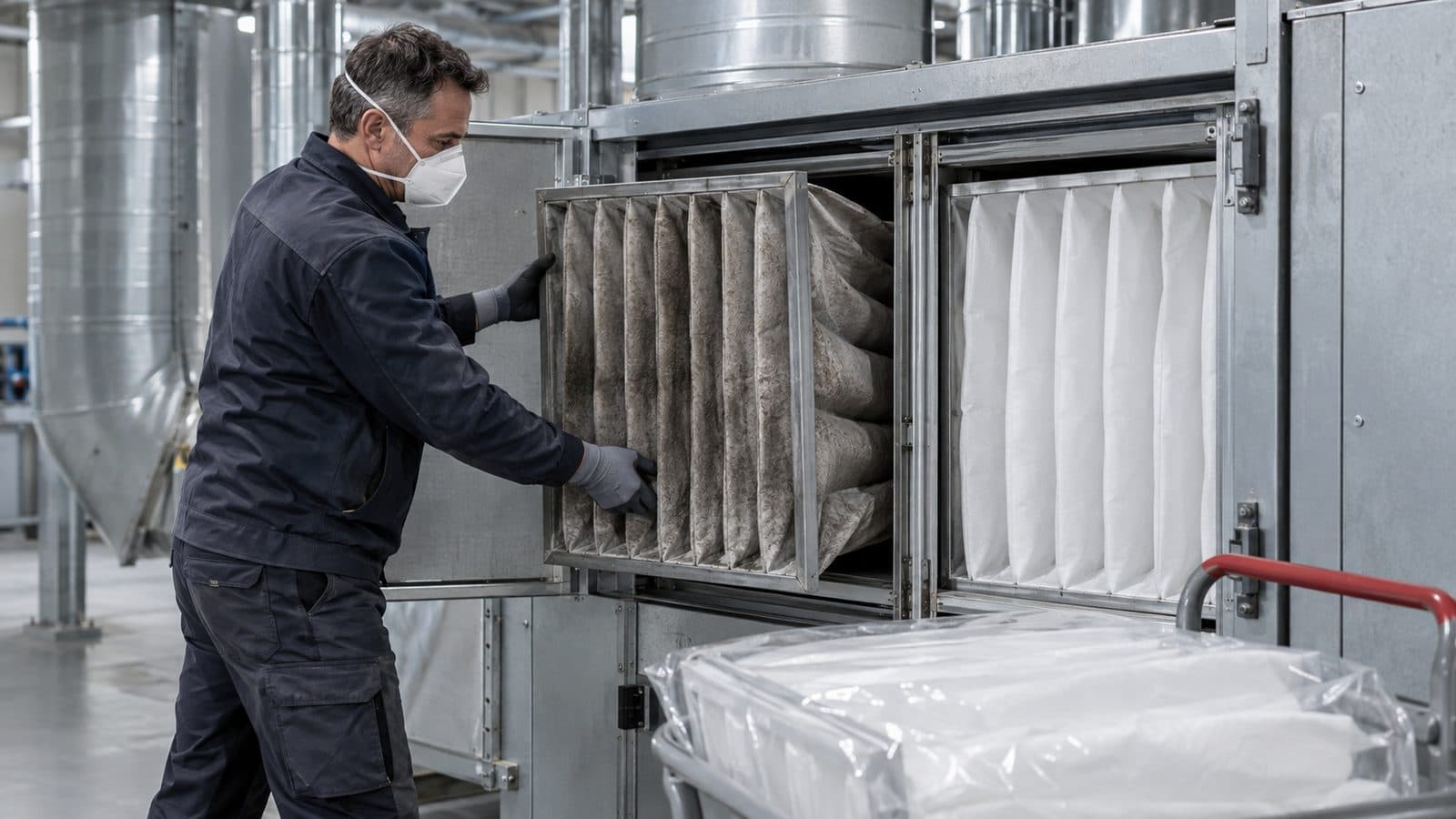
Supply and extract air units, filter sections, attenuators and fans, documented section by section.
Ductwork systems
CCTV inspection and cleaning up to 200 metres per access point, circular and rectangular, from narrow ducts to walk-in shafts.
Coils and heat exchangers
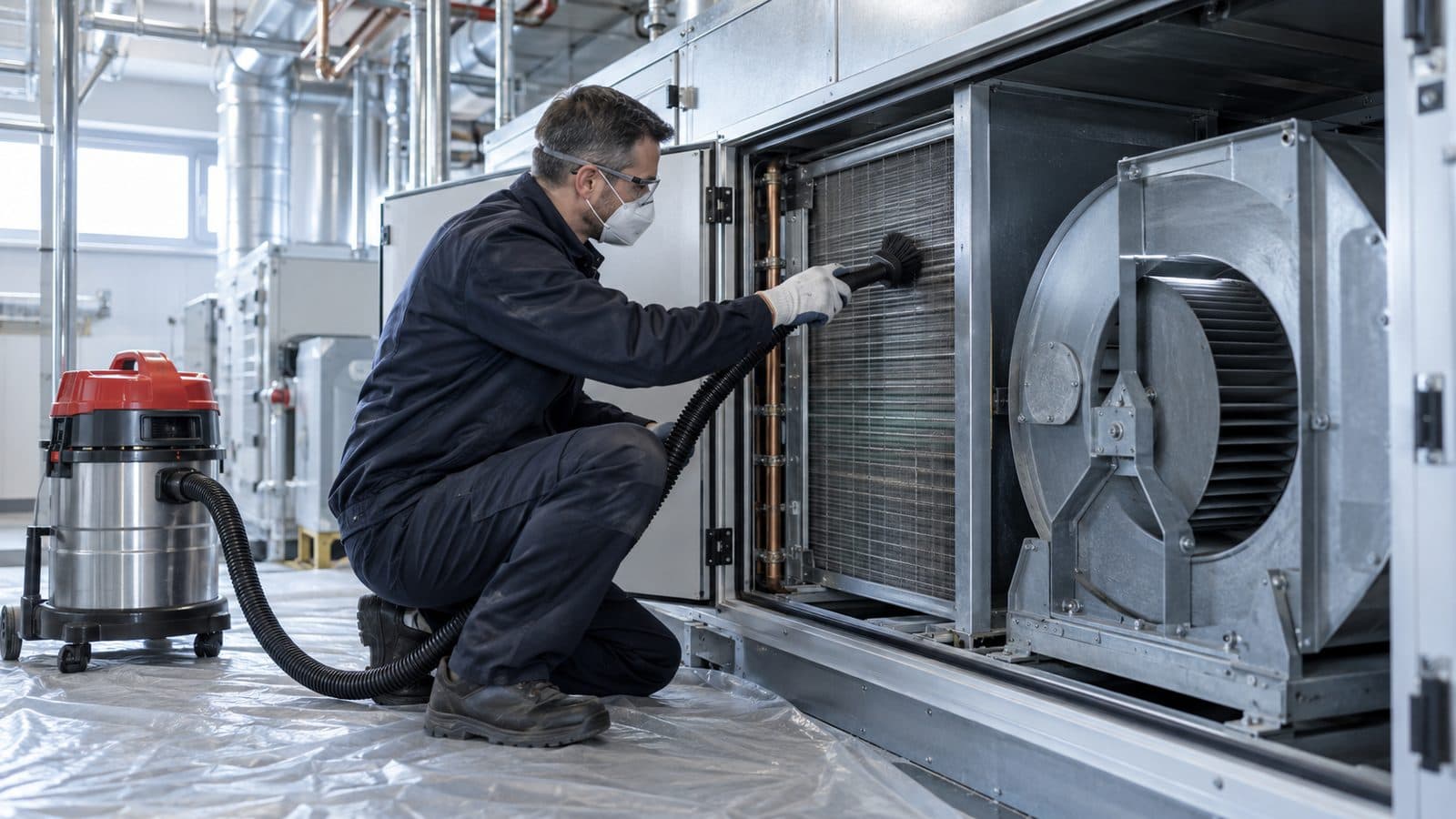
Cleaning of heating and cooling coils and counterflow heat exchangers, wet or with dry ice, depending on the component.
Humidifiers and condensate drip trays
The most critical components of any system, because standing water between 25 and 45 °C is the ideal breeding ground.
Air terminals and grilles
Vacuuming instead of brushing, so that dust is not spread around the room. Removable grilles are cleaned outside the room.
Why HI-Lüftungsservice
One access point every 50 to 100 metres
Without a robot, the duct often has to be opened in many places. Every cut is a potential leakage point and remains visible. We cover the run with the robot instead.
Working from access platforms
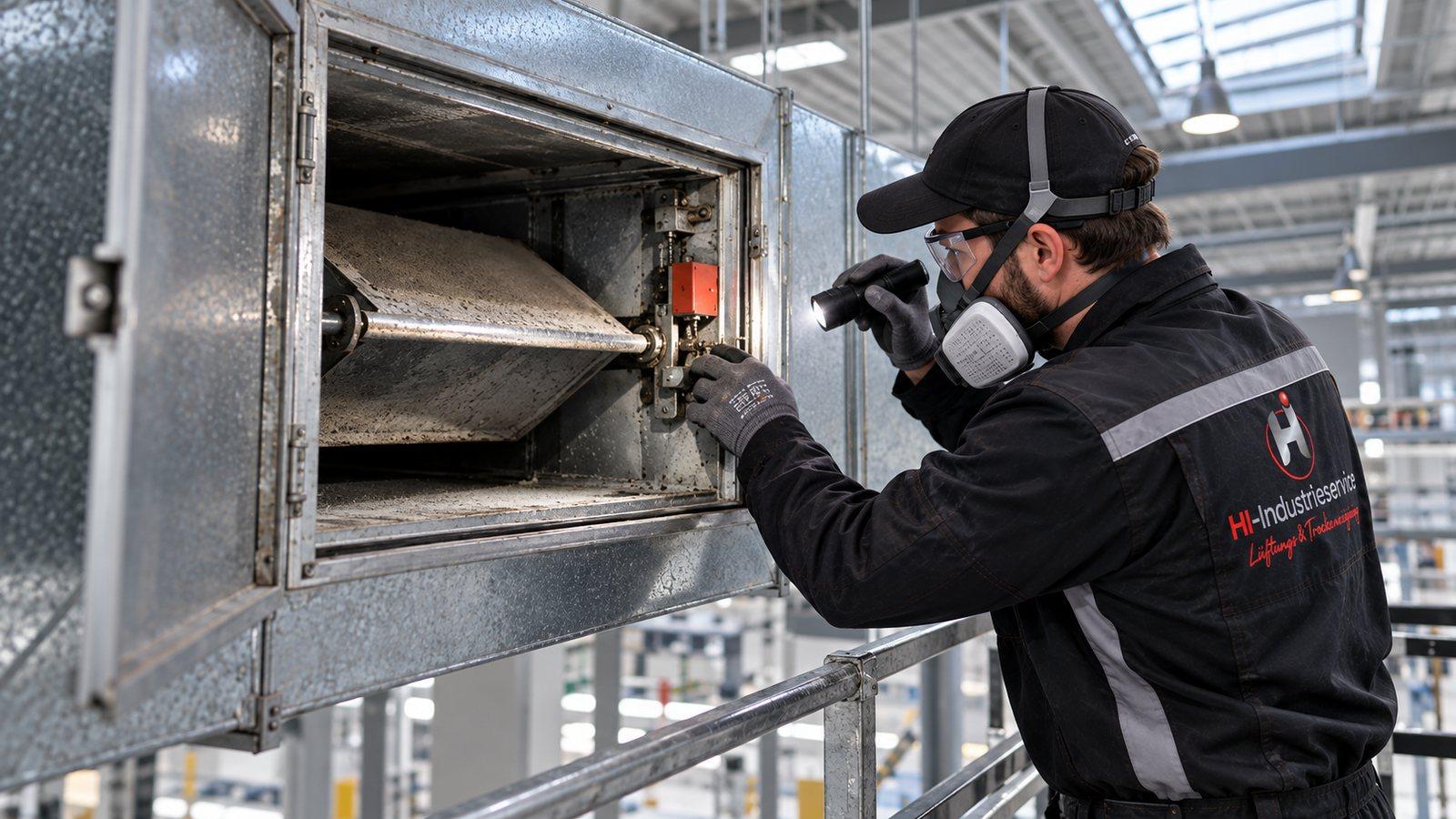
Scaffolding is often not permitted in live production areas. We work from our own access platforms with full fall protection, without the hall having to be cleared.
Lower energy consumption
A US field study measured 41 to 60 per cent less fan energy after cleaning in three of four systems. Just one millimetre of deposits on a coil can cost up to ten per cent of its heat transfer capacity.
Evidence that stands up
CCTV inspection before and after the work, a cleaning report and, on request, a laboratory report from an independent partner laboratory.
Ventilation system cleaning: frequently asked questions
VDI 6022 sets maximum intervals for hygiene inspection: no later than every two years for systems with humidification, otherwise no later than every three years. Whether cleaning is needed, and how extensive it must be, depends on the inspection findings. The benchmark is the surface dust density, measured gravimetrically in line with DIN EN 15780: depending on the quality class, cleaning is required from 0.6 or 3 g/m², and after cleaning no more than 0.3 g/m² may remain.
Often not. We seal off individual duct sections with an inflatable duct balloon, create negative pressure there and clean that section while the rest of the system keeps running. If your process needs a continuous air supply, we come at night, at the weekend or during your company shutdown.
That depends on the level of contamination, the length of the duct network and accessibility, so there is no general answer. A system that has not been touched for ten years takes considerably longer than one that is serviced regularly. After the CCTV inspection, we give you a reliable time frame.