Dry ice cleaning for ventilation and plant equipment
Wherever water and chemicals are not an option: on coils, motors, air handling units and sensitive components.
Dry ice cleaning
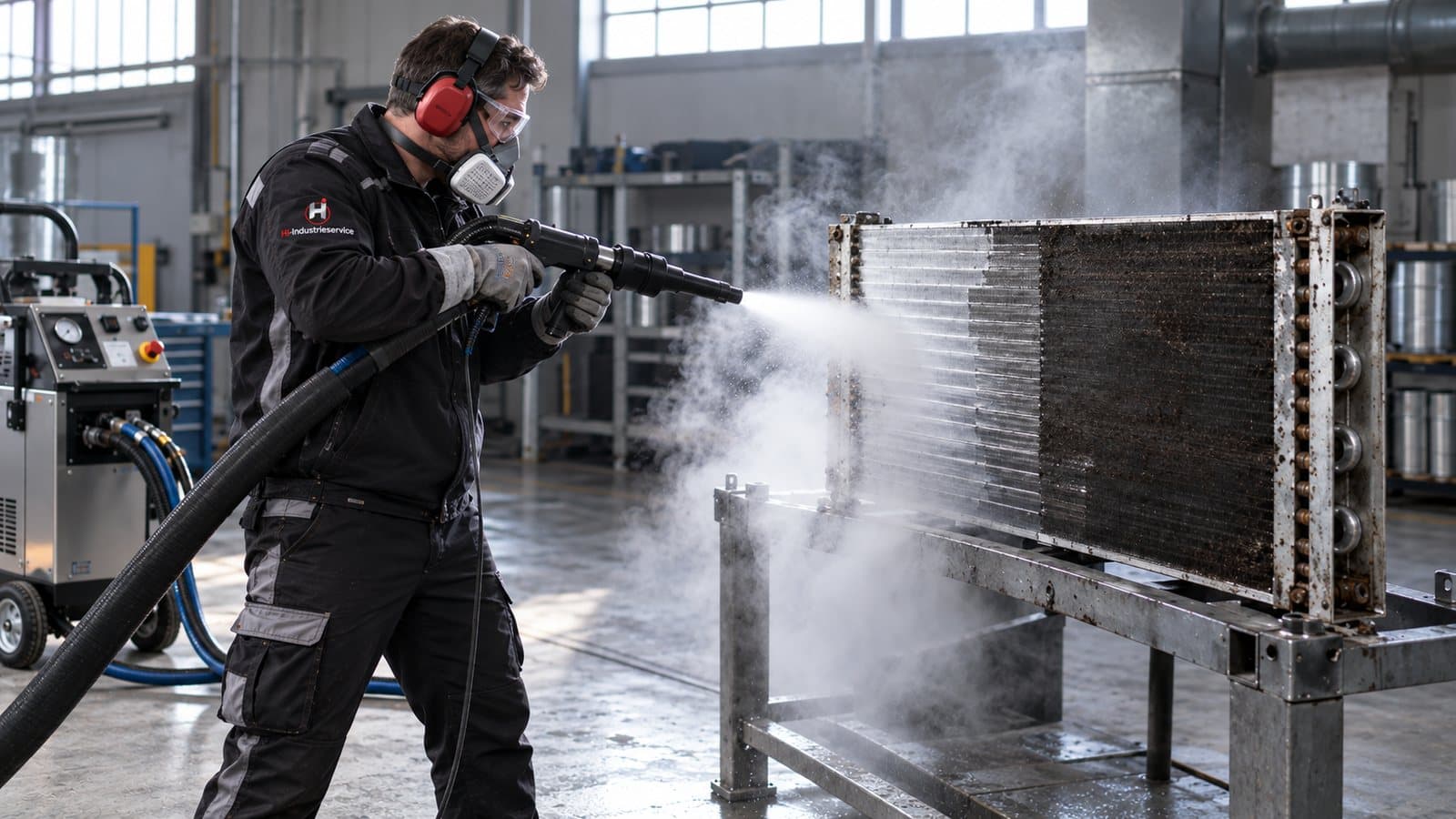
Dry ice blasting works with CO₂ pellets at −78.5 °C. Three effects act at the same time: the impact loosens the layer, the thermal shock makes it brittle so that it cracks, and as the dry ice turns to gas, the layer lifts off.
In ventilation engineering, this is the right choice wherever water has no place: on motors, sensors, switching components and anywhere no drying time can be scheduled. The process is non-conductive, non-abrasive and leaves no residue.
We have been using it for more than 20 years, not only in ductwork but also on components, tools and machinery.
What we take care of
Coils and heat exchangers
The fins are gently cleared without bending them and without introducing water into the unit.
Motors and fans
Dry ice is non-conductive, which makes it safe to use on electrical components and sensors.
Fan impellers and casings
Especially where wet cleaning is not possible because the motor cannot be removed.
Components and machinery
Also beyond ventilation, for example on tools, moulds and plant components in production.
Dry ice cleaning: frequently asked questions
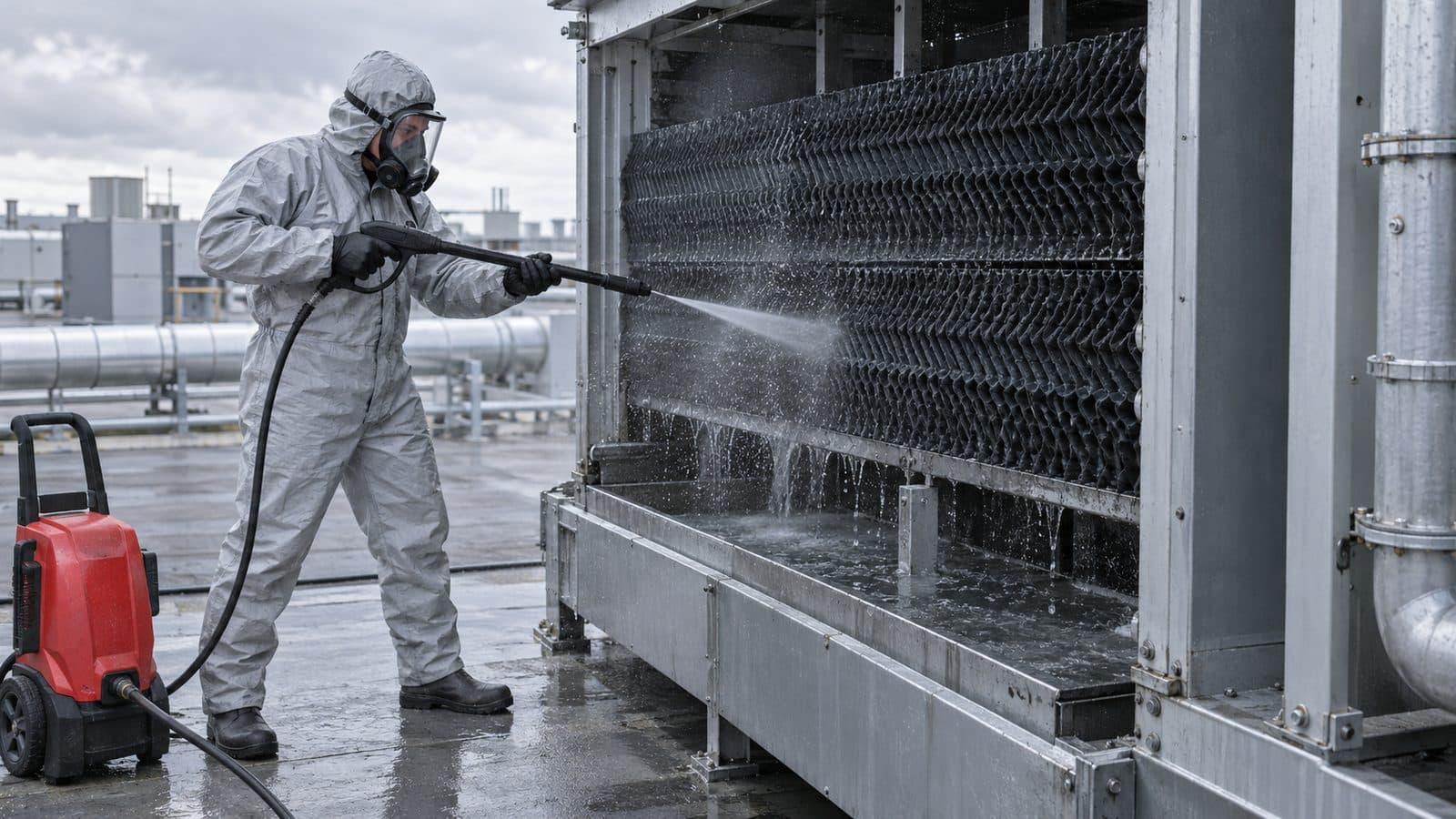
No, and we tell you so in advance. We usually clean air handling units wet, using high pressure and a collection system that safely drains away the dirty water. We loosen heavily gummed-up layers mechanically first. Dry ice excels wherever things have to stay dry.
Only the loosened dirt. The CO₂ turns completely into gas, so there is no spent blasting media and no waste water.
In many cases, yes, depending on the component and its surroundings. Because dry ice works without water, the system is ready for use again immediately after cleaning.