Kitchen extract cleaning based on VDI 2052
Extract canopies, grease ducts and roof extract fans in hospitality, hotels and commercial kitchens. With a post-clean certificate and inspection label.
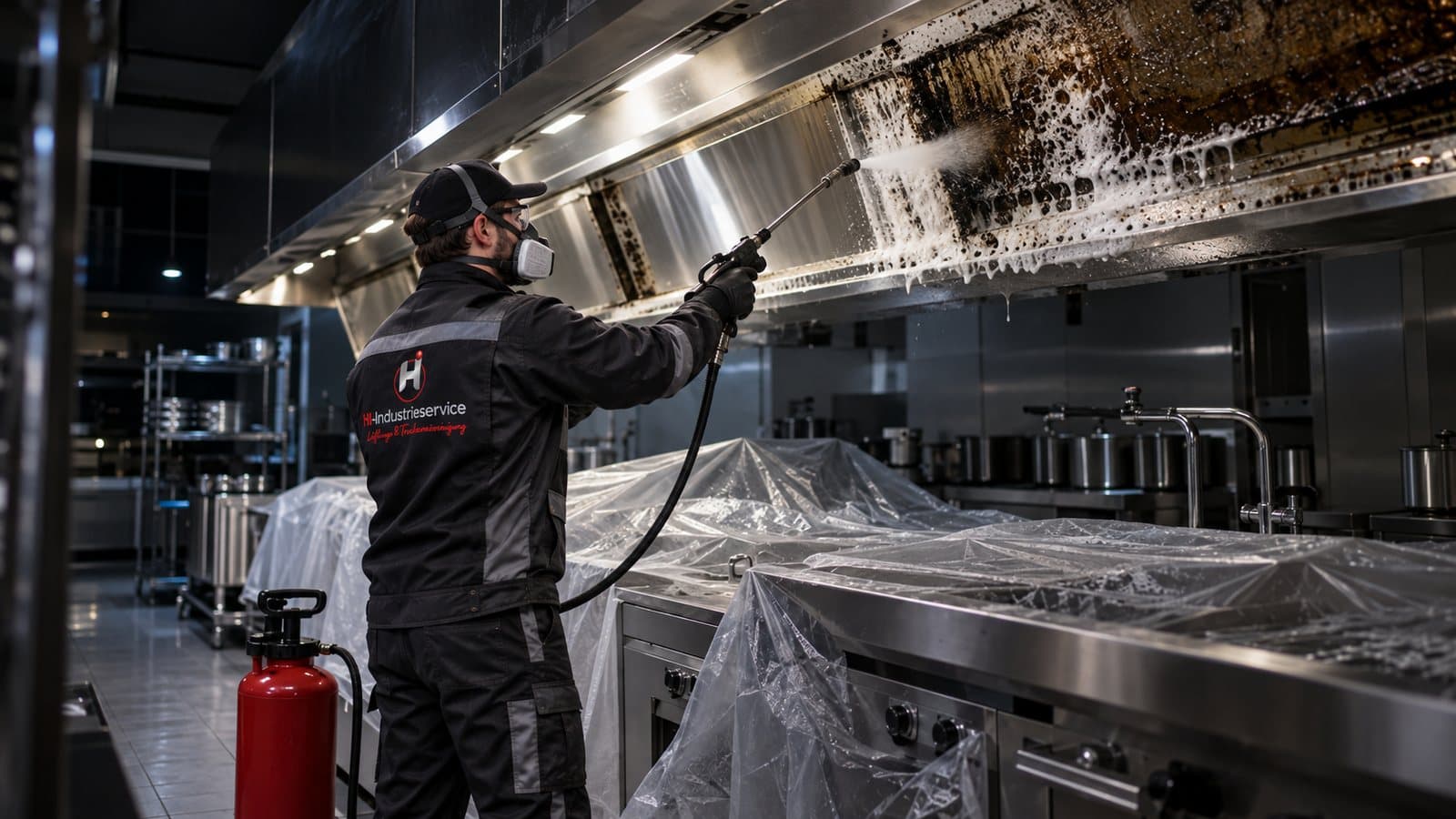
Kitchen extract cleaning
In commercial kitchens, grease condenses on the cooler duct walls and builds up there layer by layer. At full cooking load, one cubic metre of kitchen extract air contains up to 300 milligrams of grease.
What matters is what it turns into over time: fresh cooking fat only ignites above 320 °C. With old, polymerised grease, the ignition temperature is below 130 °C. According to the fire loss statistics of the German Fire Protection Association (vfdb), 27 per cent of all building fires start in kitchens.
We clean canopies, the duct run and the roof extract fan, document their condition before and after, and issue a post-clean certificate and inspection label.
Kitchen extract cleaning: frequently asked questions
VDI 2052 provides for an inspection of the extract ducts at least every six months and at least one cleaning for fire safety per year. For high-output kitchens with fryers and grills, shorter intervals make sense.
After a fire, insurers systematically check whether the cleaning intervals were adhered to. Missing records are treated as organisational negligence and can cost you your insurance cover.
Yes, in hospitality that is standard practice. Out-of-hours work is charged at a surcharge.
Everything that carries air
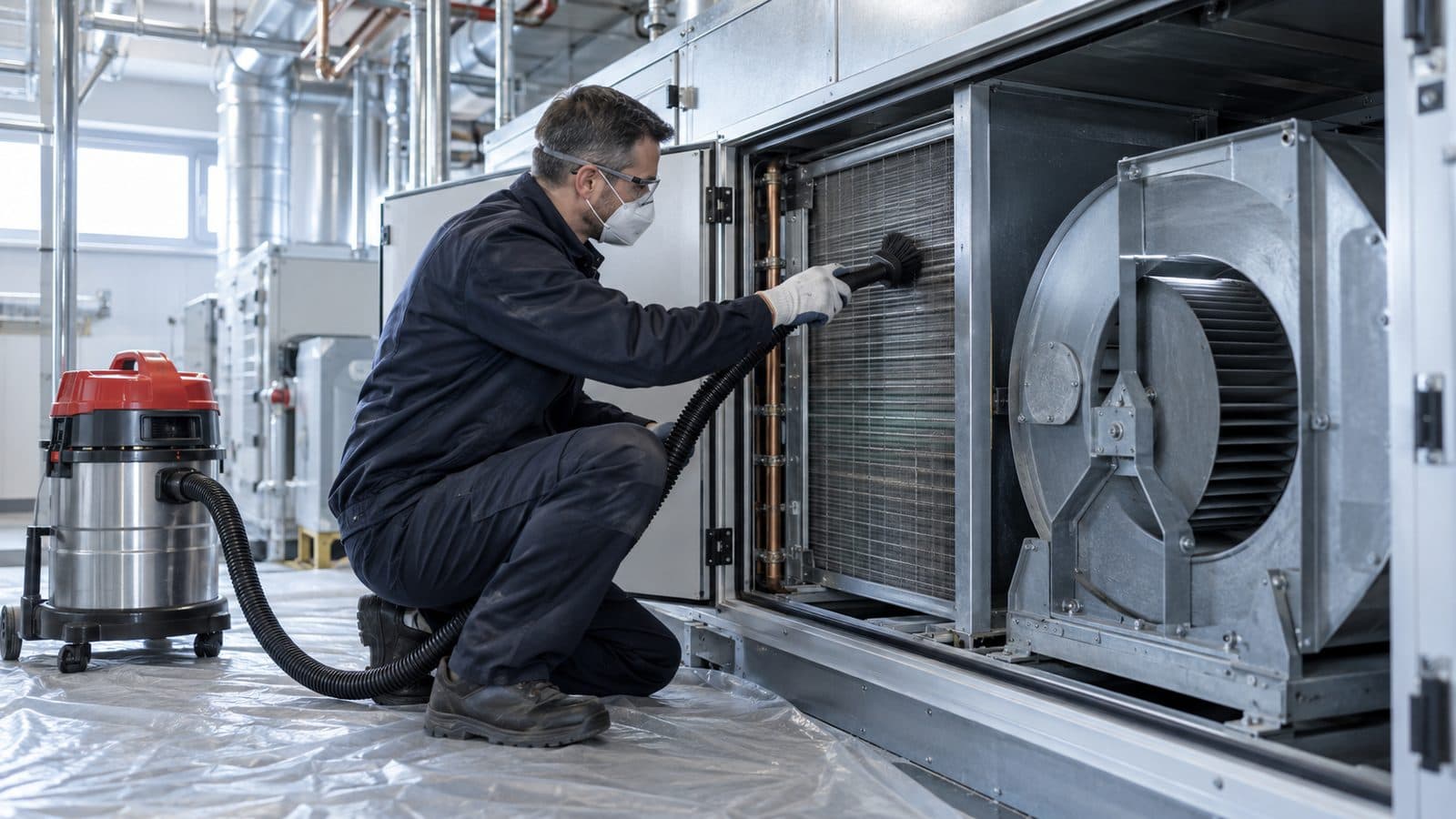
Ventilation system cleaning
Air handling units, ductwork systems, coils, heat exchangers, humidifiers, air terminals
Learn more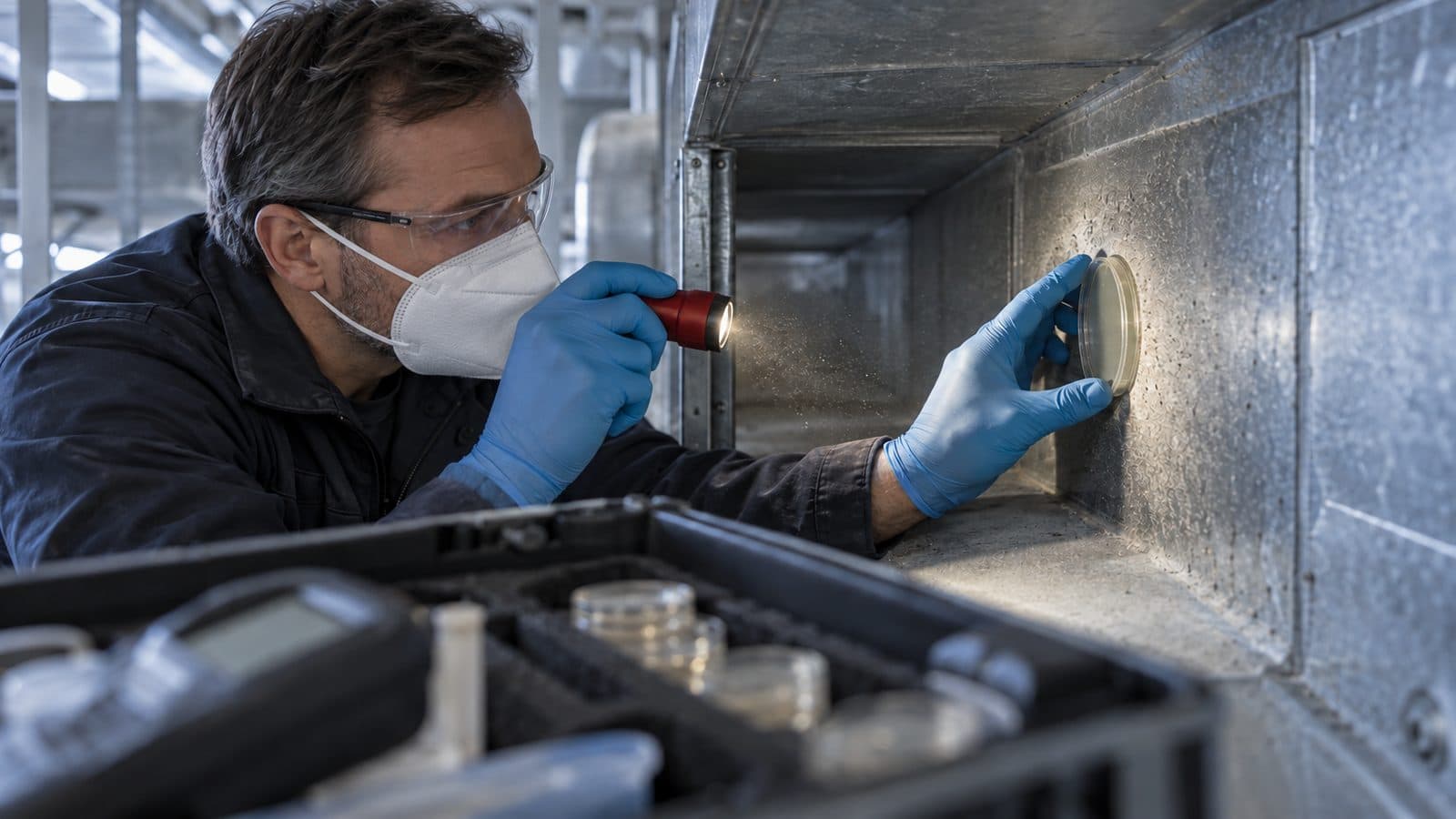
VDI 6022 hygiene inspection
CCTV inspection, condition survey, sampling, report
Learn more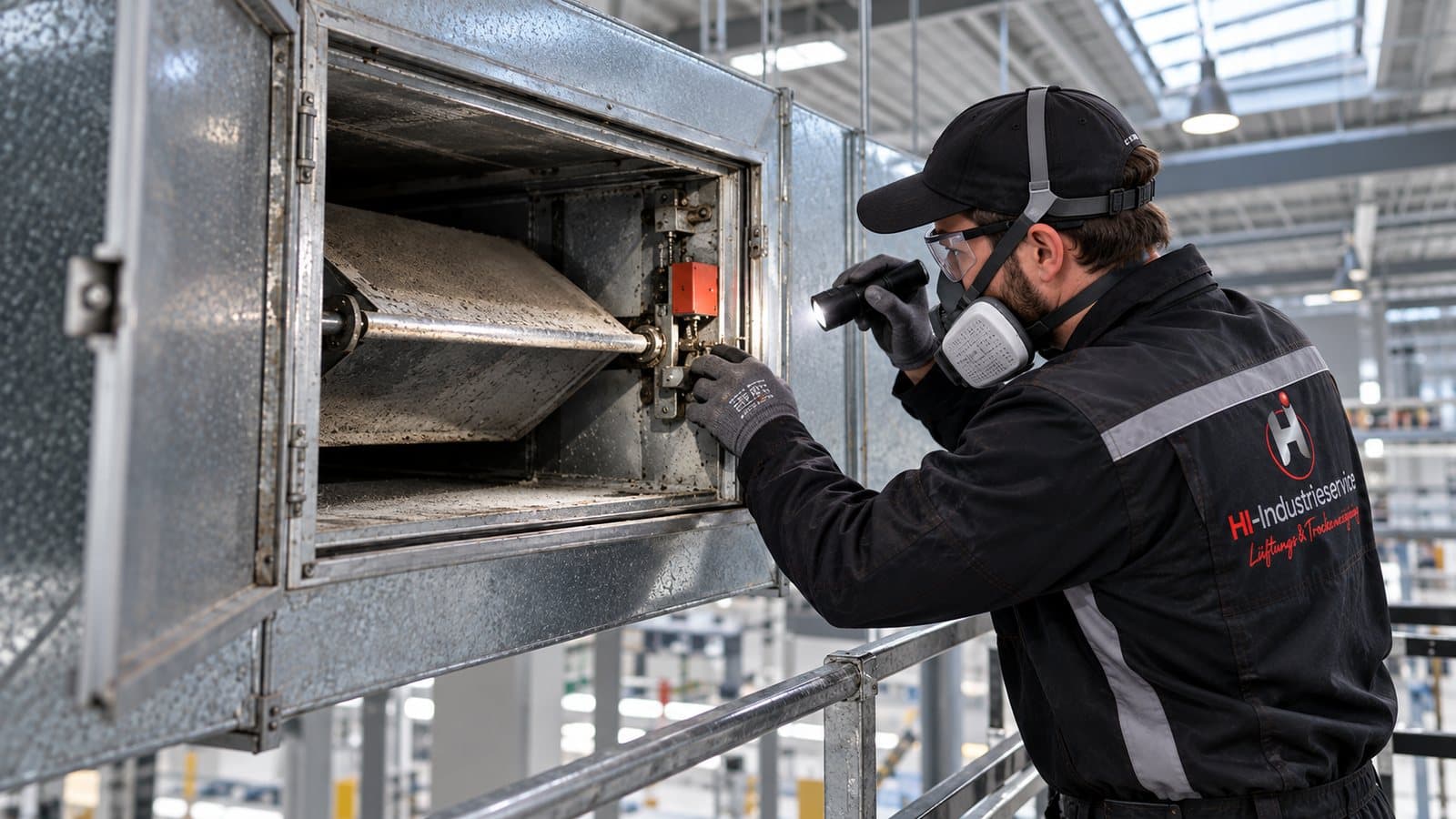
Fire damper and smoke extract cleaning
Fire dampers, smoke extract systems, fire-rated ductwork
Learn more